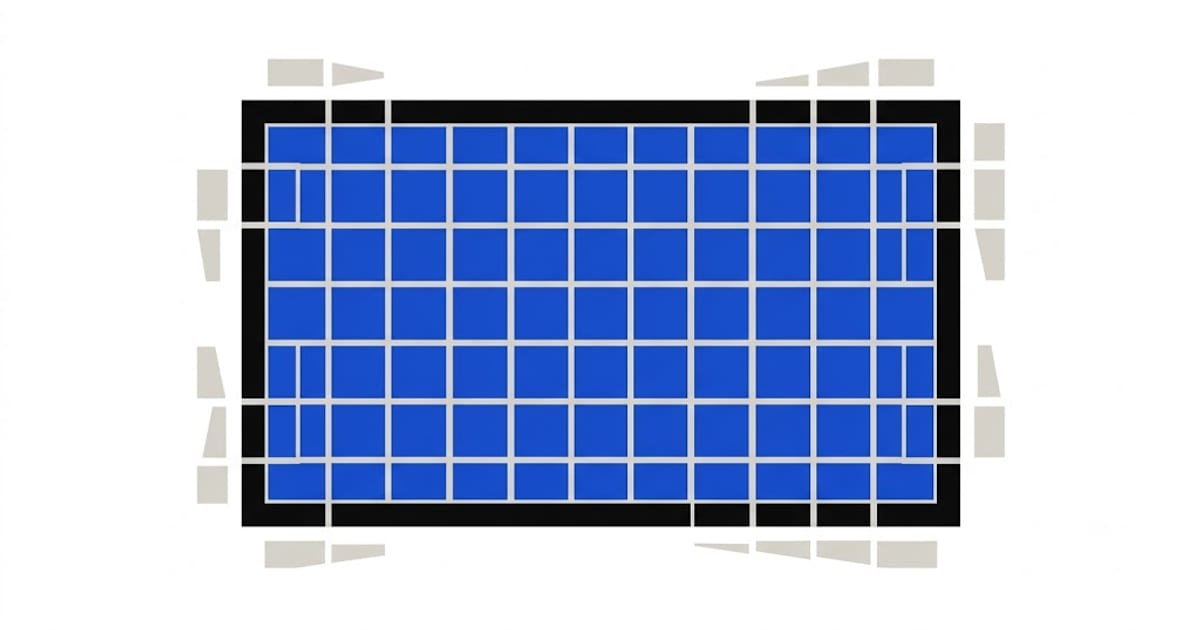
Tile count starts as simple division:
tiles = floor area ÷ tile area
A 10 × 12 ft room is 120 ft². 12 × 24 in tiles are 2 ft² each, so 60 tiles.
Then the allowance, and the allowance is the real question.
Waste by pattern
| Layout | Add |
|---|---|
| Straight / stack bond | 10% |
| Running bond (brick offset) | 10% |
| Diagonal 45° | 15% |
| Herringbone | 20% |
| Versailles / modular | 15% |
| Complex rooms, many cuts | +5% on any of the above |
Diagonal and herringbone waste more because nearly every perimeter tile takes two cuts, and the offcut from a two-cut tile fits nowhere else.
A room with alcoves, a kitchen island, or a lot of door openings adds cuts everywhere and deserves the extra 5% regardless of pattern.
Large-format tiles waste more
A 24 × 48 in tile cut to fill a 6-inch strip wastes most of the tile. The same strip in 6 × 6 tiles wastes almost nothing.
As tile size goes up, so does the fraction lost at every edge. For anything over about 18 inches on a side, take the upper end of the allowance.
Buy from one lot
This is more important than buying the exact number.
Ceramic and porcelain are fired in batches, and colour and size vary measurably between production runs. The lot or shade number is printed on every box, and tiles from different lots laid in the same floor show as a visible change part way across the room.
Two consequences:
- Buy the whole job at once, from one lot.
- Keep the leftovers. A cracked tile in three years cannot be matched from a shop, and a box in the garage is the only realistic repair.
Coverage per box
Boxes are sold by square feet of coverage, not by tile count, and the coverage figure assumes normal grout joints. Divide your total by the box coverage and round up — you cannot buy part boxes.
Rounding up per box is itself a small extra allowance, and it is the one people forget to account for when they think they have bought exactly 10% extra.
What the allowance does not cover
Breakage in transit and handling is inside the 10%. A tile dropped on the cut edge, a tile that snaps wrong in the cutter, a tile with an unnoticed chip — these are what the allowance is for.
A change of mind about layout is not. Deciding on herringbone after buying for straight lay is a second order.
Work the count and the box quantity together on the tile calculator — the box rounding is where the two-step version usually goes wrong.