Grout
Grout does not follow floor area. It follows total joint length, and joint length goes up sharply as the tile gets smaller.
A hundred square feet of 24″ tile has about 100 linear feet of joint. The same hundred square feet in 2″ mosaic has roughly 1,200. That is more than ten times the grout for the same floor, and any estimate quoted as "pounds per square foot" without asking the tile size is a guess.
Sanded or unsanded is a rule, not a preference
⅛ inch and wider: sanded. The sand is structural. It stops the grout shrinking and cracking as it cures across a wide joint.
Narrower than ⅛ inch: unsanded. Sand physically cannot pack into a tight joint, and forcing sanded grout in leaves voids behind a surface that looks perfectly fine.
There is one override: polished stone and glass take unsanded regardless of joint width, because sand scratches the face.
Buy one bag more than the calculation
Running out mid-floor is worse than it sounds. The second batch cures at a different rate and often dries a visibly different shade — color lots vary between bags, and so does how long the mix sat before it went down. A partial bag left over costs a few dollars; a floor with two shades of grout is permanent.
Joint depth matters as much as width
These figures assume the joint is as deep as the tile is thick. If thinset squeezed up into the joints when the tile was set, the real depth is less and you will use less grout — but you will also have a weaker joint. Clean the joints out while the thinset is still soft rather than grouting over it.
Seal it, or accept it will stain
Cement grout is porous. On a kitchen floor or a shower, sealer is the difference between grout that stays the color you chose and grout that goes gray in a year. Epoxy grout avoids the problem entirely at the cost of being much harder to work with.
5 articles
What size grout line for 8x24 tile?
| Recommended joint | 1/8″ |
|---|---|
| Grout typejoints under 1/8″ take unsanded, 1/8″ and over take sanded | Sanded |
| ANSI absolute minimumno joint may be tighter than this, whatever the tile | 1/16″ |
| Large format?any side over 15″ counts, and it changes the mortar and the offset | Yes — 24″ side |
| Maximum running-bond offsetTCNA guidance for tiles with a side over 15″ unless the maker states otherwise | 33% |
| Mortarimproved polymer-modified, for back coverage across a large tile | ANSI A118.15 |
| — Joint by how the tile is made — | |
| Rectified porcelainedges ground square after firing — the tightest joints are only possible here — ANSI minimum 1/16″ | 1/8″ |
| Pressed (calibrated) porcelain or ceramicfired to size, so pieces differ slightly and the joint has to absorb it — ANSI minimum 1/8″ | 1/8″ |
| Natural stonecut to size but the material itself varies; honed stone is tighter than tumbled — ANSI minimum 1/8″ | 1/8″ |
| Handmade or hand-lookthe variation is the point of the tile, and the joint has to be generous — ANSI minimum 3/16″ | 3/16″ |
Notes
- 8x24. A wide plank. Wide planks are less forgiving of a hollow in the substrate than narrow ones because there is more tile bridging the gap.
- The rule is a multiple, not a number. ANSI A108.02 sets the joint at at least three times the actual variation in facial dimension of the tile you bought — with an absolute floor of 1/16″. That means the answer depends on the box in front of you, not on the size alone. Lay ten tiles face up, measure the smallest and the largest, and multiply the difference by three.
- This joint takes sanded grout. At 1/8″ and wider, unsanded grout shrinks and cracks as it cures. The sand is structural, not filler.
- Large format changes three things at once. Any side over 15 inches means: a higher-performance mortar (ANSI A118.15) to get back coverage across the tile, a substrate flat enough that the tile is not bridging a hollow, and an offset of no more than a third if you are running a bond pattern. A 50% offset on a 24-inch tile puts the crown of one tile against the edge of the next, and that lippage is visible from across the room under any raking light.
- Tighter joints are a design choice with a cost. A 1/16″ joint reads as a continuous surface and is what makes large-format tile look like slab. It also removes every bit of tolerance you had — the layout has to be right first time, the substrate has to be flat, and the tile has to be rectified. Going from 1/16″ to 1/8″ buys back a great deal of forgiveness for very little visual change.
- Manufacturer instructions override this page. Where the box specifies a minimum joint, that figure governs, and ignoring it is usually what voids the warranty.
Grout joint width by tile size
19 calculations · browse all
- What size grout line for subway tile?
- What size grout line for 12x24 tile?
- What size grout line for 24x48 tile?
- What size grout line for 24x24 tile?
- What size grout line for 3x12 tile?
- What size grout line for 4x12 tile?
- What size grout line for 4x16 tile?
- What size grout line for 6x24 tile?
- What size grout line for 6x36 tile?
- What size grout line for 8x24 tile?
- What size grout line for 3x6 tile?
- What size grout line for 4x8 tile?
- What size grout line for 12x12 tile?
- What size grout line for 18x18 tile?
- What size grout line for 16x16 tile?
- What size grout line for 8x8 tile?
- What size grout line for 6x6 tile?
- What size grout line for 6x12 tile?
- What size grout line for 4x4 tile?
Grout for a tiled area
200 calculations · browse all
- How much grout for 20 ft² of 2×2″ mosaic tile?
- How much grout for 20 ft² of 12×12″ tile?
- How much grout for 30 ft² of 2×2″ mosaic tile?
- How much grout for 30 ft² of 12×12″ tile?
- How much grout for 40 ft² of 2×2″ mosaic tile?
- How much grout for 40 ft² of 12×12″ tile?
- How much grout for 50 ft² of 3×6″ subway tile?
- How much grout for 50 ft² of 12×24″ tile?
- How much grout for 60 ft² of 3×6″ subway tile?
- How much grout for 60 ft² of 12×24″ tile?
- How much grout for 80 ft² of 3×6″ subway tile?
- How much grout for 80 ft² of 12×24″ tile?
- How much grout for 100 ft² of 4×4″ tile?
- How much grout for 100 ft² of 18×18″ tile?
- How much grout for 120 ft² of 4×4″ tile?
- How much grout for 120 ft² of 18×18″ tile?
- How much grout for 140 ft² of 4×4″ tile?
- How much grout for 140 ft² of 18×18″ tile?
- How much grout for 160 ft² of 6×6″ tile?
- How much grout for 160 ft² of 24×24″ tile?
- How much grout for 180 ft² of 6×6″ tile?
- How much grout for 180 ft² of 24×24″ tile?
- How much grout for 200 ft² of 6×6″ tile?
- How much grout for 200 ft² of 24×24″ tile?
- How much grout for 240 ft² of 12×12″ tile?
- How much grout for 280 ft² of 2×2″ mosaic tile?
- How much grout for 280 ft² of 12×12″ tile?
- How much grout for 320 ft² of 2×2″ mosaic tile?
- How much grout for 320 ft² of 12×12″ tile?
- How much grout for 360 ft² of 2×2″ mosaic tile?
- How much grout for 360 ft² of 12×24″ tile?
- How much grout for 400 ft² of 3×6″ subway tile?
- How much grout for 400 ft² of 12×24″ tile?
- How much grout for 450 ft² of 3×6″ subway tile?
- How much grout for 450 ft² of 12×24″ tile?
- How much grout for 500 ft² of 3×6″ subway tile?
- How much grout for 500 ft² of 18×18″ tile?
- How much grout for 600 ft² of 4×4″ tile?
- How much grout for 600 ft² of 18×18″ tile?
- How much grout for 700 ft² of 4×4″ tile?
- How much grout for 700 ft² of 18×18″ tile?
- How much grout for 800 ft² of 4×4″ tile?
- How much grout for 800 ft² of 24×24″ tile?
- How much grout for 1000 ft² of 6×6″ tile?
- How much grout for 1000 ft² of 24×24″ tile?
- How much grout for 1200 ft² of 6×6″ tile?
- How much grout for 1200 ft² of 24×24″ tile?
- How much grout for 1500 ft² of 6×6″ tile?
 What a 25 lb Bag of Grout Actually Covers
A bag's coverage figure is real. It is also stated for one specific tile size, joint width and thickness — change any of the three and the number moves by a lot.
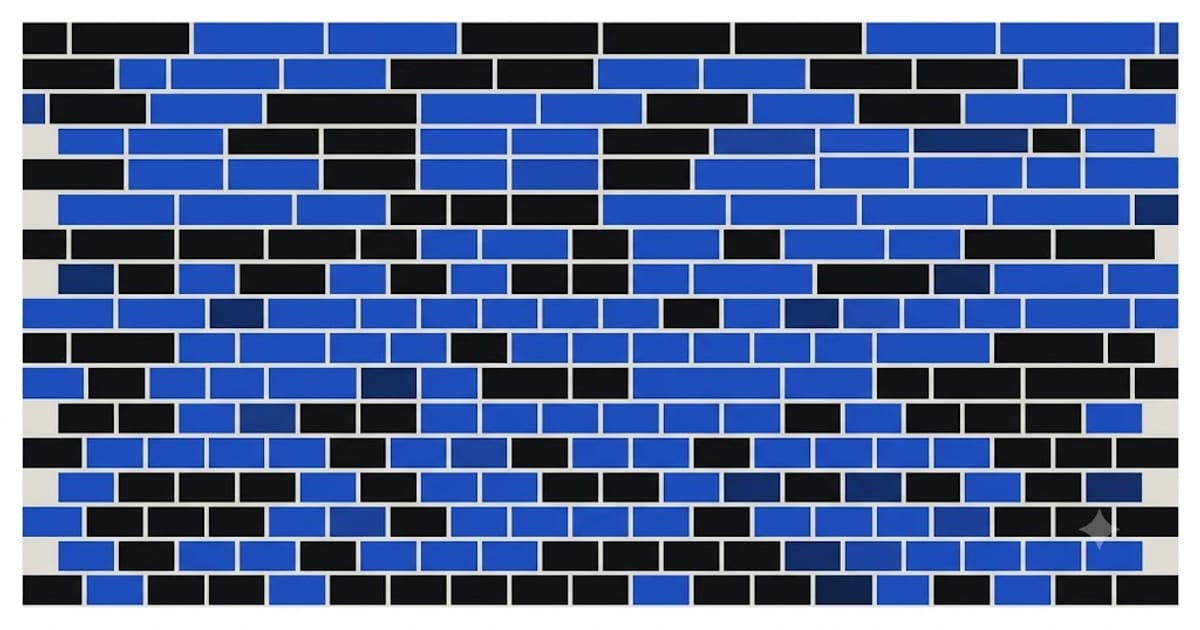 Grout for Subway Tile: Three Times the 12-Inch Figure
Subway tile is the highest grout consumption per square foot of any common format. If you sized the order from a floor tile figure, you are about a third of the way there.
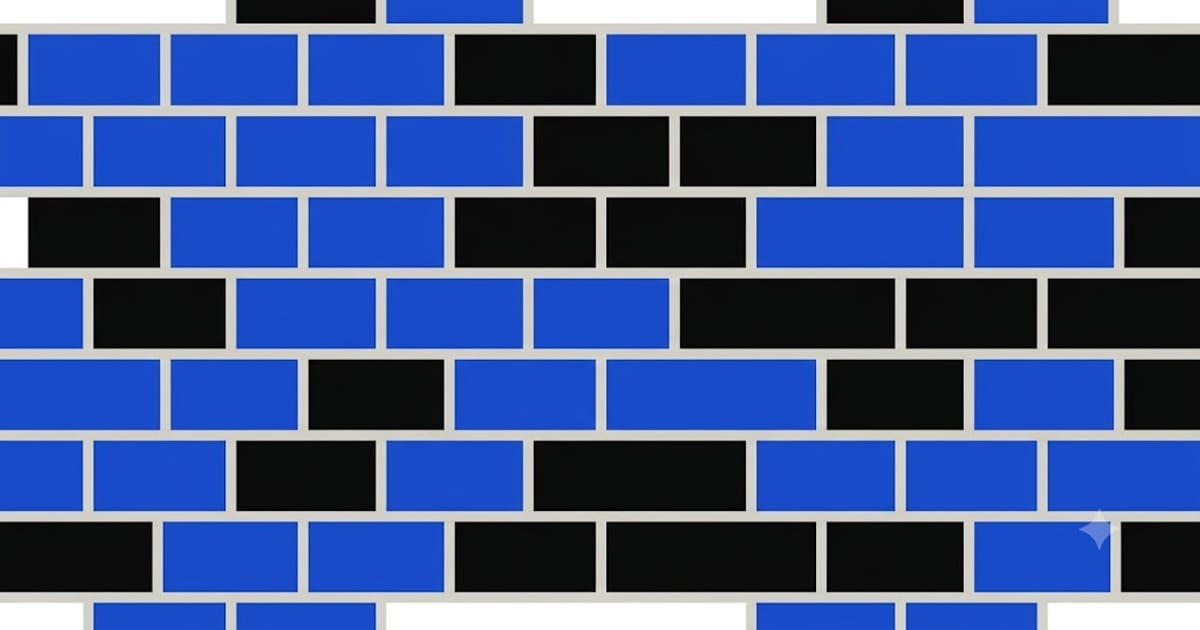 Grout for 12 × 24 Tile: Why the Big Format Uses Less
Large format tile is the one place where the bigger product costs you less of something. Grout is that something, and the saving is exactly a quarter.
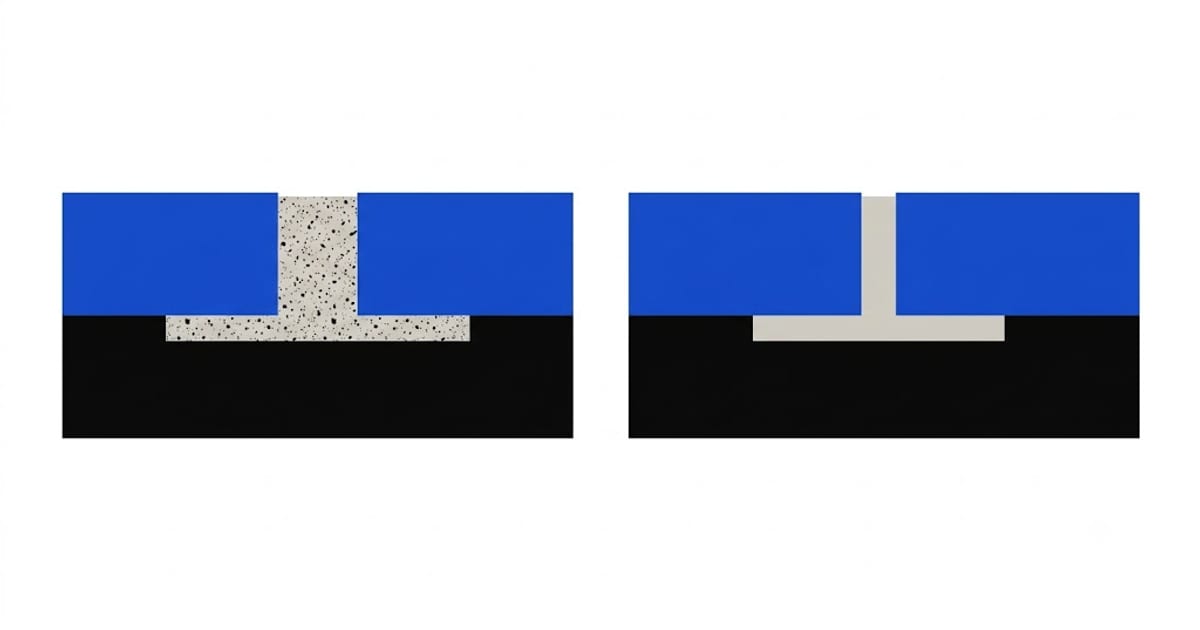 Sanded or Unsanded: The Joint Width That Decides It
The dividing line is 1/8 inch and it is not a style guideline. Using the wrong one on either side of it produces a specific, predictable failure.
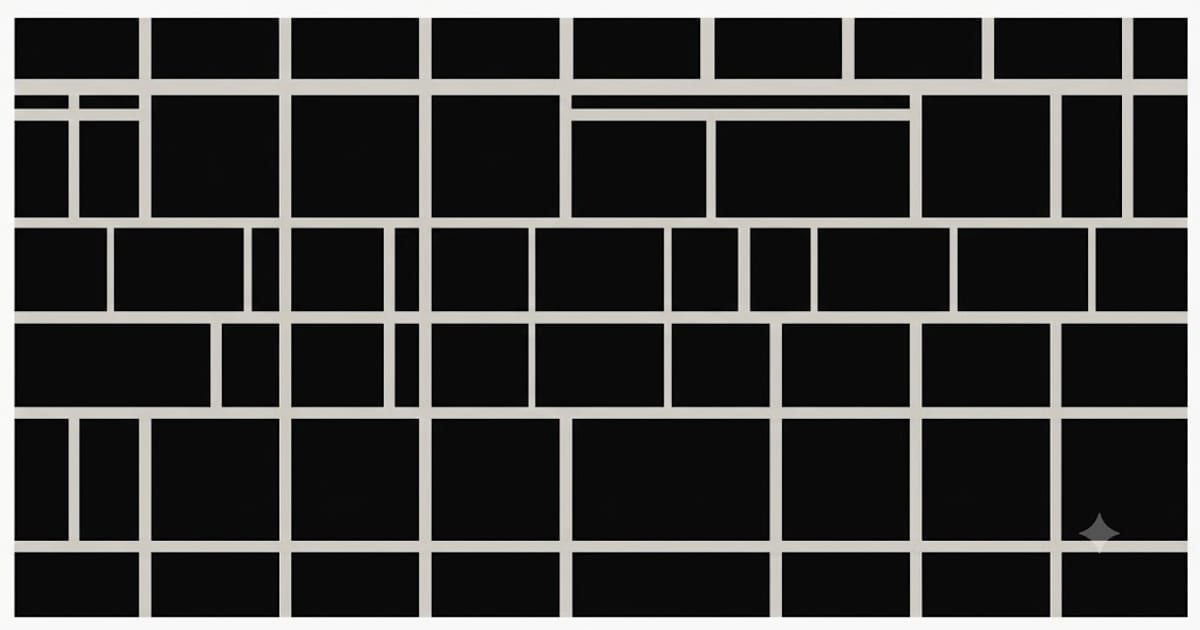 Grout Coverage: The Geometry Behind the Number on the Bag
Coverage figures on a grout bag assume a tile size you probably are not using. The underlying geometry is simple, exact, and scales in a way that surprises people the first time they see it.