Tile Quantity
Tile quantity starts as division — area ÷ tile area — and everything that goes wrong is in the allowance.
Waste by pattern
Straight or running bond 10%. Diagonal 15%. Herringbone 20%. Add 5% for a room with alcoves, an island, or many door openings.
Diagonal and herringbone waste more because nearly every perimeter tile takes two cuts, and a two-cut offcut fits nowhere else.
Large-format tiles waste more at any pattern: a 24 × 48 in tile cut to fill a 6-inch strip loses most of the tile, where the same strip in 6 × 6 loses almost nothing.
Buy from one lot
More important than buying the exact number. Ceramic and porcelain are fired in batches and color varies measurably between runs — the shade number is on every box, and tiles from two lots in one floor show as a visible change part way across the room.
Keep the leftovers. A cracked tile in three years cannot be matched from a shop.
Grout is a different calculation entirely
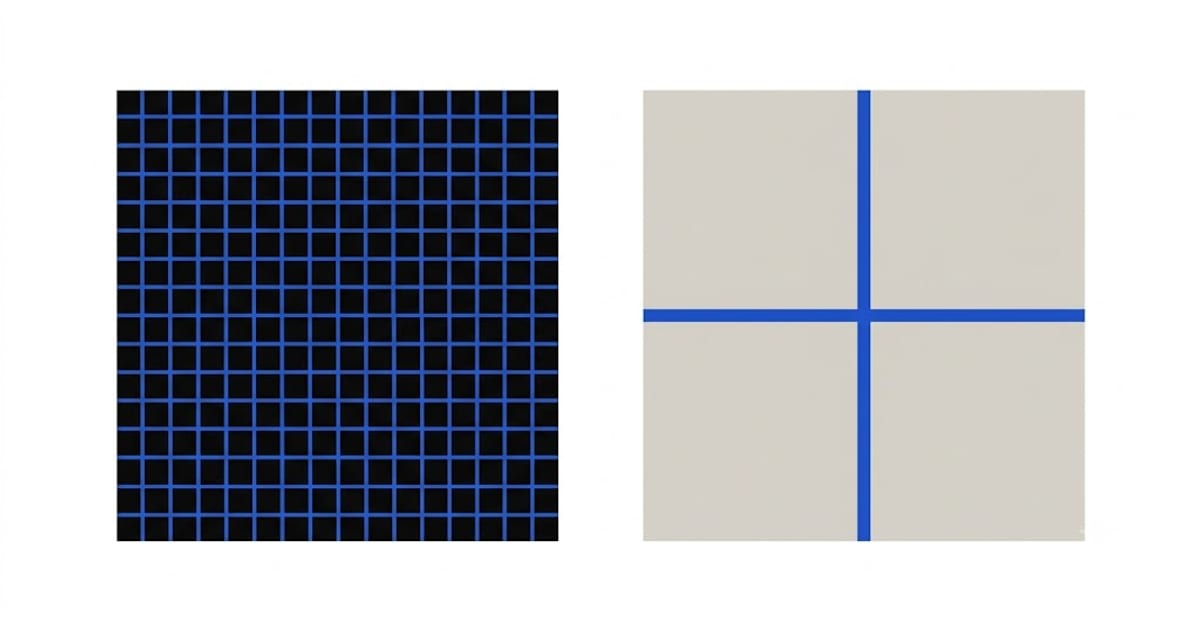
Grout depends on joint length, which is set by tile size. A 2 × 2 in mosaic has roughly twelve times the joint per square foot of a 24 × 24 in tile — same room, twelve times the grout. Joint width and tile thickness scale it further.
Thinset depends on the trowel
And the trowel depends on the tile: 1/4 × 1/4 in notch for tile up to 8 in, 1/2 × 1/2 in for 12 to 16 in, larger above that. ANSI A108.5 requires 80% mortar contact for dry floors and 95% for wet areas — that is the specification the notch choice has to satisfy.
Tile over about 15 inches also needs back-buttering, which adds 30 to 40% to thinset consumption. Budget it rather than discover it.
Porcelain or ceramic
One measured property separates them: porcelain absorbs 0.5% or less of its weight in water. Everything else — frost resistance, density, stain resistance, price — follows from that.
PEI rates the glaze surface, not the body, and says nothing about frost resistance or absorption.
8 articles
 Thinset Coverage per Bag: 90 Square Feet or 25, and the Trowel Decides
The bag prints a coverage figure that assumes a trowel size it does not name. Change the notch and the same bag covers a third as much floor.
 What Size Trowel for Tile? Match the Notch to the Tile, Then Check the Back
The chart gets you to the right aisle. What settles it is lifting one tile and looking at how much mortar actually touched it.
 How Many 12×12 Tiles in 100 Square Feet? 100 — Then Buy 110
The arithmetic gives a round number that is right and not enough. Two things separate the count from what you should put in the trolley.
 How Much Extra Tile to Buy: 10%, 15% or 20% — and What Sets the Number
Waste percentage is not a safety margin. It is a prediction about how many cut tiles produce a usable second piece, and the pattern decides it.
 How Many Tiles: Waste Allowance Is the Whole Question
Dividing the floor area by the tile area is the easy part and nobody gets it wrong. The waste allowance is where jobs run short, and running short is expensive in a way that running over is not.
 Grout Quantity: Joint Width and Depth Drive It, Not Floor Area
Two identical floors can need wildly different amounts of grout. Area is the smallest term in the equation.
 Thinset Coverage: The Trowel Decides, Not the Tile
Thinset quantities are set by the notch size of your trowel, and the notch size is set by the tile. Get the first wrong and you either run out or fail to bed the tile.
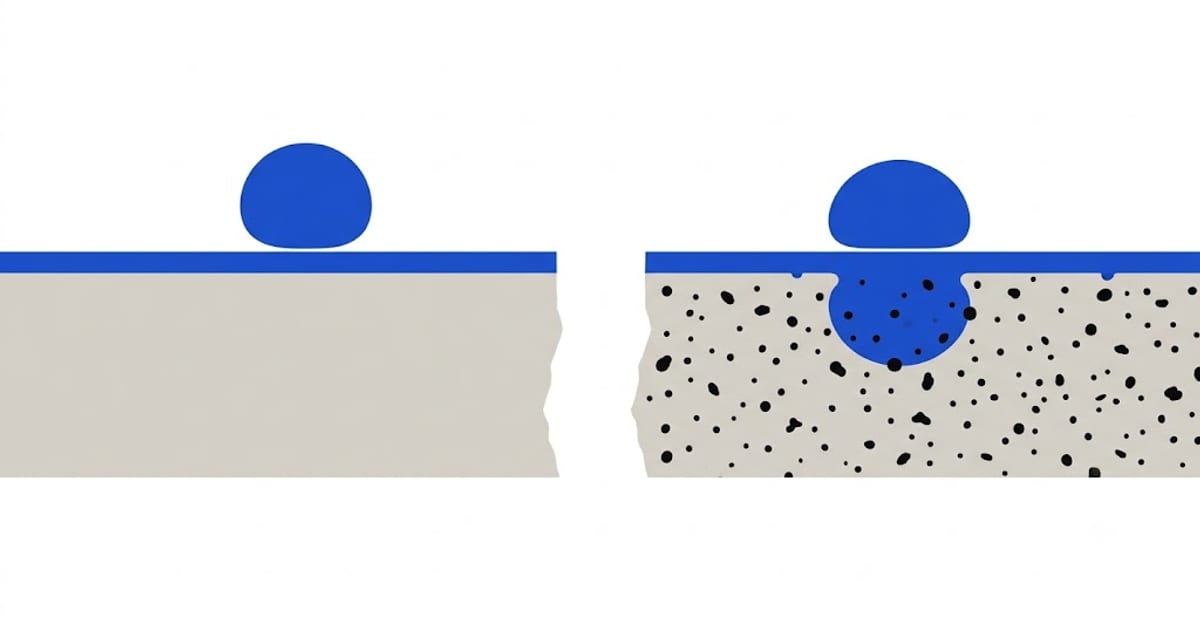 Porcelain or Ceramic: One Number Separates Them
Porcelain is ceramic. The distinction is a single measured property, and everything else that differs between them follows from it.