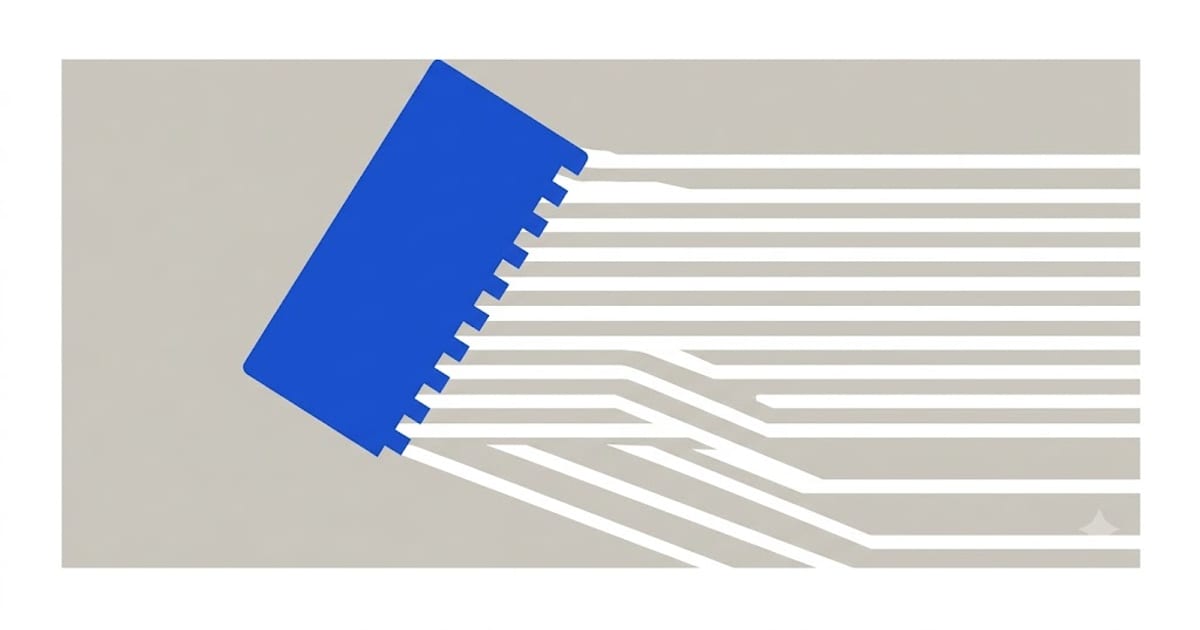
A 50 lb bag of thinset covers anywhere from about 90 square feet to about 25, and the variable is the trowel:
| Trowel notch | Coverage per 50 lb bag |
|---|---|
| ¼ × ¼ in square | 90–95 ft² |
| ¼ × ⅜ in square | 70–75 ft² |
| ½ × ½ in square | 40–45 ft² |
| ¾ × ⅝ in U-notch | 25–30 ft² |
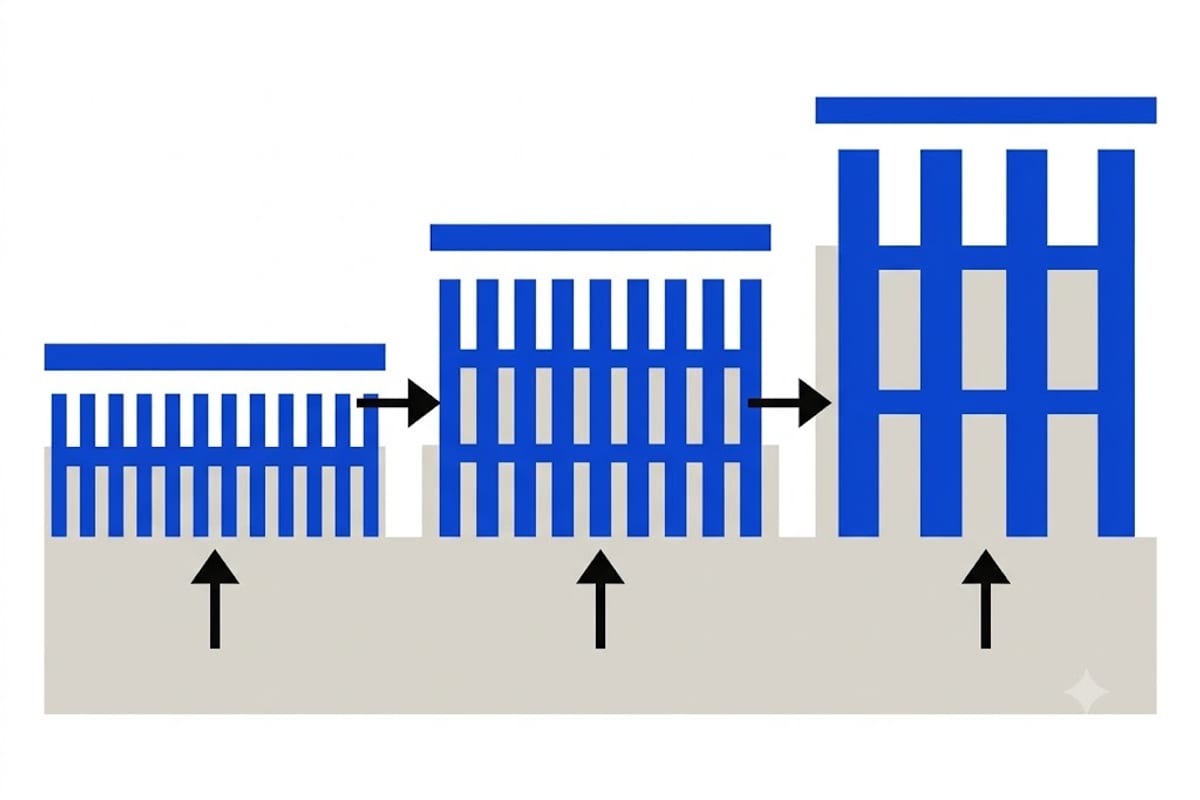
The notch sets the ridge height, the ridge height sets the mortar bed thickness, and thickness times area is volume. Nothing else in the calculation moves as much.
Back-buttering roughly doubles it
Large-format tile and natural stone usually need mortar applied to the back of the tile as well as the substrate. That is not optional on big tiles — it is how you reach the coverage the manufacturer requires.
Budget for roughly double the figures above wherever back-buttering is specified. People run short on this constantly, because the bag's coverage figure never assumes it.
Coverage means contact, not square feet
There is a second meaning of "coverage" and it is the one that matters structurally: the percentage of the tile's back in contact with mortar.
Industry requirements:
- 80% for dry interior floors and walls.
- 95% for wet areas, exteriors, and large-format tile.
Voids under a tile are where cracks start and where water sits. A tile at 60% contact looks identical to one at 95% until something fails.
Check it rather than assume it. Set a tile, then immediately lift it and look at the back. Do this early in the job and again whenever the tile size or substrate changes. If contact is short, go up a notch size.
Trowel straight, not in swirls
Ridges should run in parallel straight lines, all in one direction. Swirls and arcs trap air in the low points, and trapped air is a void that no amount of pressing removes.
With straight ridges, setting the tile perpendicular to them collapses the ridges sideways and pushes air out at the edges. This costs nothing and is the difference between 70% and 95% contact with the same trowel.
Substrate flatness changes everything
Coverage figures assume a flat substrate. They are not achievable on one that is not.
A floor with dips needs extra mortar to bridge them, and on a bad floor consumption can exceed the printed figure substantially. Worse, thinset is not a levelling product — thick beds shrink unevenly and crack.
If the substrate is out of flat by more than the tolerance for your tile size, fix the floor with a self-levelling compound first. Large-format tile in particular demands a flat substrate, and the reason is covered in large-format tile lippage.
Working out what to buy
- Measure the area.
- Pick the trowel from the tile size — see what size trowel.
- Divide by the coverage figure for that notch.
- Double it if back-buttering.
- Add 10–15% for waste, mixing losses and the bag that stiffens while you take a call.
Thinset has a working time measured in tens of minutes once mixed. Buy an extra bag rather than plan to mix exactly enough — an unopened bag is returnable, a stalled job is not.
FAQ
How much does a 50 lb bag of thinset cover?
From about 90 square feet with a ¼ × ¼ inch trowel down to about 25 with a ¾ × ⅝ inch notch. The trowel size is the main variable.
Does back-buttering use more thinset?
Yes, roughly double. Coverage figures on the bag never assume it.
What is the required mortar coverage under a tile?
80% contact for dry interior areas, 95% for wet areas, exteriors and large-format tile.
Should I trowel in straight lines or swirls?
Straight parallel lines. Swirls trap air in the low points, leaving voids under the tile.
How do I check coverage?
Set a tile, lift it immediately and look at the back. Do this early and whenever tile size or substrate changes.