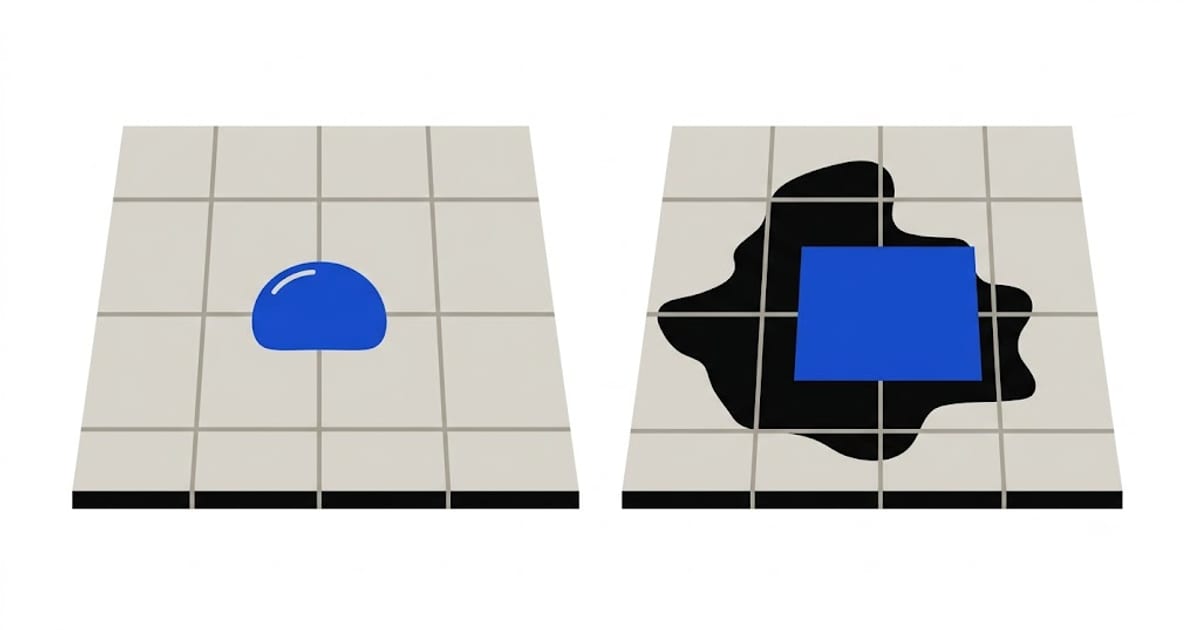
Natural stone is porous. Sealing reduces how fast liquids penetrate, which buys time to wipe a spill before it becomes a stain.
That is all it does, and understanding the limit prevents most stone disappointment.
Two kinds of sealer
Penetrating / impregnating — soaks into the pores and lines them, leaving the surface appearance unchanged. Breathable, so moisture vapour can still escape. This is the right choice for almost all interior stone.
Topical — forms a film on the surface. Can add gloss or a colour-enhancing effect. Wears in traffic patterns, needs stripping and reapplying rather than topping up, and can trap moisture in the stone. Suitable for some slate and quarry tile, generally wrong for polished stone.
Stain and etch are different things
Stains are absorbed material — oil, wine, coffee. Sealer helps against these.
Etching is chemical damage: acid dissolving the calcium carbonate in marble, limestone, travertine and onyx, leaving a dull mark where the polish has gone.
No sealer prevents etching. Lemon juice, vinegar, wine, tomato, and many household cleaners will etch a marble surface through any sealer on the market. The mark is not on the surface — the surface is gone.
This is the single most common misunderstanding about stone, and it is why polished marble in a kitchen is a maintenance commitment rather than a finish.
Granite, quartzite and slate are silicate stones and do not etch. They still stain, so they still benefit from sealing.
Which stones need it most
| Stone | Porosity | Sealing |
|---|---|---|
| Limestone, travertine | high | essential, frequently |
| Marble | moderate | recommended |
| Slate | low–moderate | recommended |
| Granite | low | recommended, less often |
| Quartzite | very low | optional |
| Porcelain | negligible | not needed |
Honed and tumbled finishes are more absorbent than polished ones of the same stone, because polishing itself closes the surface.
The water test
Drop a tablespoon of water on the stone and leave it 5 to 10 minutes.
If it beads and wipes away with no dark mark, the sealer is working. If the stone darkens where the water sat, it is absorbing and it is time to reseal.
Do this test every six months rather than resealing on a schedule. Frequency depends far more on use and finish than on time.
Seal before grouting
Porous stone should be sealed before grouting, or grout haze soaks into the face and is very difficult to remove. Then seal again after grouting to protect the grout joints.
Grout itself is porous cement and stains readily — sealing the joints is often more valuable than sealing the tile.
Cleaning
pH-neutral stone cleaner only. Vinegar, lemon, bleach and most bathroom cleaners are acidic or alkaline enough to etch or strip. A stone floor cleaned weekly with an acidic product will lose its finish within a year, and the repair is professional refinishing.